
Margin notes from a copy of The Plague I read through the winter after the pandemic, the one I had bought years earlier and had never managed to finish, because the book had been too much for me before and was, suddenly, exactly the book I could read.
Page 3: “The unusual events described in this chronicle occurred in 194- in Oran.” Margin: Camus writes the book in 1947 and sets it vaguely in the nineteen-forties. The vagueness is deliberate. He does not want a reader to read it as a historical novel about a specific plague. He wants a reader to read it as a parable. In 2020 it became a historical novel about the plague we had just lived through. Camus would have been horrified by the specificity the twenty-first century forced onto his vagueness.
Page 11: Dr. Rieux finds a dead rat in his stairwell. Margin: The opening is unhurried. Camus trusts the reader to wait. A contemporary novelist would not. A contemporary novelist would make the first dead rat a plot event. Camus makes it a detail. This is the craft difference between 1947 and now.
Page 30: “Everybody knows that pestilences have a way of recurring in the world; yet somehow we find it hard to believe in ones that crash down on our heads from a blue sky.” Margin: THIS. Twice underlined. This is the core epistemological claim of the book. Plagues are a normal feature of human history. Modern Westerners have decided they are an aberration. The whole book is about what happens when a population that has decided plagues are impossible is forced to notice one.
Page 47: Rieux’s deliberately plain prose style. Margin: Camus is writing against the Romantic tradition of French writing-about-catastrophe. He refuses to make the plague beautiful. He refuses to make Rieux heroic. Every adjective is measured. Every metaphor is flat. This is philosophical. Camus is arguing that a decent response to plague is ordinary, not elevated, and the prose has to match.
Page 68: The scene with Father Paneloux’s first sermon — God’s punishment on Oran. Margin: Camus writes Paneloux sympathetically in the first sermon and brutally in the second. A writer of lesser conviction would have picked a lane. Camus tracks the priest’s actual evolution across the book — from theodicy to collapsed faith. Paneloux is the book’s most honest character, because he is the only one whose mind changes visibly under the weight of what he witnesses.
Page 93: “There can be no peace without hope.” Margin: A line Camus almost retracts later. Watch this.
Page 117, the Tarrou chapter, heavily underlined: Tarrou’s confession about having grown up as the son of a prosecutor who asked for death sentences. “And I realized that all the time, all those long years, I’d been an assassin in all but name. I realized that I had, even with my good intentions, even with my second-hand integrity, consented to plague.” Margin: The thesis of the book. We are all, in the normal conduct of our lives, consenting to plague. The plague is not the aberration. The plague is what normal life has always been. We have only been given a year to notice.
Page 133: The sequence where Rieux and Tarrou swim in the sea together. Margin: The only scene of pure pleasure in the book. Camus gives it four pages. He does not apologize for it. He does not undercut it. He lets the two men have a night off, and he lets the reader have a night off, and the night off is structurally necessary because the book’s argument is that a human being who does not permit himself pleasure under the conditions of plague is as much a collaborator as the man who pretends the plague is not happening.
Page 157, Rambert’s chapter: The Parisian journalist trapped in Oran by the quarantine who spends half the book trying to escape to his wife and who, at the decisive moment, chooses to stay and help Rieux’s sanitary teams. Margin: Camus refuses to give Rambert a noble reason. He stays because he would feel ridiculous leaving. “This whole thing isn’t about heroism.” A French writer of the 1940s, having just lived the Occupation, writing about resistance without once using the word heroism. This is the discipline.
Page 174: Father Paneloux’s second sermon. The child has died in agony. Paneloux cannot defend God anymore. He tries. He fails. He dies shortly after. Margin: Camus does not convert Paneloux. He lets the character’s faith die inside his faith, which is realer than conversion. He dies still a priest. He dies with the God question unresolved. Camus is an atheist who treats Christian faith with a respect almost none of his contemporaries managed.
Page 198: “The plague bacillus never dies or disappears for good… it bides its time in bedrooms, cellars, trunks, bookshelves, and in old papers; that perhaps the day would come when, for the bane and the enlightening of men, the plague would rouse up its rats again and send them forth to die in a happy city.” Margin: The last paragraph. Written in 1947. Describing exactly the thing that happened in 2019. Camus would not have said he was prescient. He would have said he was reading history, and that anyone reading history at the depth he was reading it would have seen 2019 coming, because 2019 is what happens when you let the human habit of denial have another eight decades to ripen.
Back cover, in pencil: Finished tonight. Took me five years from buying the book to reading it. The book waited. The book was for the year after the plague, not the year of the plague. Camus knew. He wrote for the year after.
A related vagobond.com piece: A Question of Authority: Can There Be Authority in an Anarchist Society.
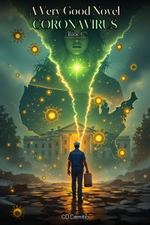
Readers and fans of The Plague will really enjoy A Very Good Novel: Coronavirus — my novel about the specific plague Camus could only describe in the abstract, written from inside the year he was writing for. Same parable. Different century. Same ending. Have a look and let me know what you think.

CD Damitio writes at indignified.substack.com — essays on utopias, dystopias, and the spaces between. Free to read. No algorithm, no sponsored content. His books can be found on Amazon at https://www.amazon.com/stores/CD-Damitio/author/B001JP7NWA
CD Damitio writes INDIGNIFIED — utopias and dystopias explored. Free to read.