This one fed into the book chapter on the day the terrorists won. I wrote it in 2007, when a federal judge was deciding whether to add terrorism enhancements to the sentences of ten people who had admitted setting fires — to a ski resort, research facilities, a lumber company — on behalf of the Earth Liberation Front. They’d already pled guilty to arson. The question was whether arson became terrorism because of what they believed.
The legal distinction mattered more than people acknowledged at the time. A terrorism designation doesn’t just change how long you serve. It changes where you serve it. It changes what you’re called afterward. It changes what label gets attached to every argument you’ve ever made about the environment or corporate power or the state’s relationship to land. The government knew this. That’s why Attorney General Alberto Gonzales pushed for the enhancement. Not because arson is different terrorism than arson, but because “ecoterrorist” is a more useful political category than “arsonist who cared about trees.”
The Earth Liberation Front never killed anyone. The fires were targeted at property, planned around avoiding casualties. That doesn’t make them legal or advisable. It does make them categorically different from the kind of violence the word “terrorism” was developed to describe. And yet the government wanted the word badly enough to fight for it in court.
What interests me about this case is what it reveals about how America uses fear as an administrative tool. “Terrorism” doesn’t describe behavior — plenty of non-terrorist acts kill far more people. It describes a relationship between the actor and the state’s definition of acceptable opposition. The ELF burned things the government wanted protected. Therefore: terrorists. The word is doing political work, not legal work.
The chapter in the book sits alongside other pieces from the same era asking the same question in different forms: what did America become after 9/11, and was any of it necessary?
—
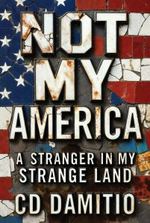
*This piece was expanded and collected in [Not My America: A Stranger in a Strange Land](https://www.amazon.com/Not-My-America-Stranger-Strange-ebook/dp/B0G3C44X7D/) — essays about America observed from the outside, by someone who left and couldn’t quite believe what he found when he looked back. Available in Kindle and paperback.*
**[Get Not My America on Amazon →](https://www.amazon.com/Not-My-America-Stranger-Strange-ebook/dp/B0G3C44X7D/)**
—
**You might also like:** [The Mountain Manifesto – A New Vision of Civilization](https://www.vagobond.com/the-mountain-manifesto-a-new-vision-of-civilization/), [2024’s Cultural Shock – Reality Shift. When both feet leave the ground](https://www.vagobond.com/2024s-cultural-shock-reality-shift-when-both-feet-leave-the-ground/), [It’s not a New America – It’s the same it always was](https://www.vagobond.com/its-not-a-new-america-its-the-same-it-always-was/)
*Browse the full CD Damitio catalog at [indignified.com/books](https://indignified.com/books)*
—
I called most of this chaos years ago. America is still unraveling — and the next chapters are already written.
If you want to understand what’s really coming (and why), read Not My America: A Stranger in a Strange Land. Available on Amazon.

CD Damitio writes at indignified.substack.com — essays on utopias, dystopias, and the spaces between. Free to read. No algorithm, no sponsored content. His books can be found on Amazon at https://www.amazon.com/stores/CD-Damitio/author/B001JP7NWA
CD Damitio writes INDIGNIFIED — utopias and dystopias explored. Free to read.