
An imagined conversation with Upton Sinclair. I get to ask the questions. He can answer however he wants.
Me: Mr. Sinclair.
Sinclair: Please. I published the book at twenty-seven. If anyone can still call me Mr. Sinclair by now, it’s because they haven’t actually read me.
Me: The famous line. “I aimed at the public’s heart and by accident hit it in the stomach.”
Sinclair: Did I say that? I said that. It was the best sentence I wrote in the fifteen years after the book came out, and I was giving interviews constantly, and it stuck because it was true.
Me: You went to the Chicago stockyards in 1904 as an undercover investigator. You worked in them. You lived in the Packingtown tenements. You came back and wrote a socialist novel. The novel got the Pure Food and Drug Act passed. It also did not, in any way, advance socialism.
Sinclair: It advanced sanitation. A victory is a victory.
Me: The meatpacking scenes — the rats, the floor-sweepings going into the sausage, the men falling into the vats — are the scenes everyone remembers. They are four chapters. The book is thirty-one chapters. What do you want readers to remember from the other twenty-seven?
Sinclair: The family. Jurgis Rudkus. His father. His wife. Their child. The slow mathematical annihilation of a family that did everything the immigration pamphlets told them to do. They came. They worked. They trusted. They were crushed. Not by one man. By a system that did not need one man.
Me: The book has been attacked for a hundred years for being too propagandistic.
Sinclair: By whom.
Me: The canon-makers.
Sinclair: Ask the canon-makers who pays them.
Me: Fair. Let me ask about the ending. The last chapters of The Jungle pivot from a family saga into a socialist political lecture. Jurgis attends a rally. A speaker speaks for pages. It reads, today, like a pamphlet glued to the back of a novel.
Sinclair: It was a pamphlet glued to the back of a novel. I knew what I was doing.
Me: Critics have said you lost your nerve as a novelist in those final pages.
Sinclair: Critics have said. Critics have been saying for a hundred years. My answer in 1906 was that I was not writing a novel, I was writing a weapon, and a weapon with a rounded handle is safer for the person holding it but worse for the job. I still think that. I was twenty-seven. I would have made a different choice at fifty. At twenty-seven I was right to make the choice I made.
Me: The Pure Food and Drug Act. The Meat Inspection Act. Both passed within months of publication. Theodore Roosevelt invited you to the White House and then, in a private letter, called you a crank.
Sinclair: He called many people cranks. He still passed the Acts. A president who agrees with you and insults you privately is a better ally than one who flatters you and does nothing.
Me: Is there anything in the book you would take back.
Sinclair: The rhetoric. Some of it. The descriptions of Lithuanian and Polish immigrants are written with the ethnographic condescension of my generation — I thought I was being sympathetic, and I was, by the standards of 1906, and I was wrong by the standards of 1956 and very wrong by yours. I cannot take the sentences back. I can only tell you, from wherever I am now, that I know.
Me: Last question. American workers today are living a version of what Jurgis lived — different industries, different factories, same arithmetic. The Pure Food and Drug Act is still being weakened. The meatpacking plants killed forty thousand workers with COVID because they were classified essential. Does this depress you.
Sinclair: It depresses me that the book is still useful. It heartens me that the book is still useful. You cannot have one without the other, and a writer takes what he is given.
A related vagobond.com piece: A Question of Authority: Can There Be Authority in an Anarchist Society.
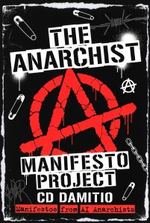
Readers and fans of The Jungle will really enjoy The Anarchist Manifesto Project 2026 — twenty-six kinds of refusal to the industrial order Sinclair was indicting, a hundred and twenty years later, written from inside each position instead of lectured from above. Same fight. Different weapon. Have a look and let me know what you think.

CD Damitio writes at indignified.substack.com — essays on utopias, dystopias, and the spaces between. Free to read. No algorithm, no sponsored content. His books can be found on Amazon at https://www.amazon.com/stores/CD-Damitio/author/B001JP7NWA
CD Damitio writes INDIGNIFIED — utopias and dystopias explored. Free to read.