
Read this book beside Joyce’s A Portrait of the Artist as a Young Man, and you will see the two hemispheres of the Edwardian novel of becoming. They were published within a year of each other — Maugham in 1915, Joyce in 1916 — and read together they form a diptych of the twentieth-century young man: one English, one Irish, both trying to slough off the institutions that made them, and both learning, slowly, that some of the institutions were inside.
Philip Carey and Stephen Dedalus are not the same boy. Philip is sincere where Stephen is theatrical. Philip is wounded — Maugham gives him a clubfoot, the way Maugham himself was wounded by his stammer — and the wound is specific, geographic, daily. Stephen is wounded by his country, his church, his language, his family. Philip’s limp is something he has. Stephen’s exile is something he performs. Maugham’s book is about learning to stop fighting what you cannot change. Joyce’s is about learning to announce it.
The pair works because they are arguing with each other without knowing it. Joyce is constructing a portrait — stepping back, framing, lacquering. Maugham is dismantling one. The whole force of Of Human Bondage is in how completely it refuses the aesthetic poses the Joyce novel makes its subject. Philip tries to be a painter in Paris, and the book watches him not be a painter. Tries to be a doctor, and the book watches him become one, by accident, without style. Falls in love with Mildred, who is a catastrophe, and the book watches him stay in love with her for seven hundred pages because Maugham is honest about how long it takes a person to stop loving the wrong person. Joyce would have given us the climactic epiphany. Maugham gives us the long, embarrassed attrition. He is right about the shape of it. Joyce is right about how we narrate it to ourselves later.
You should read them in order. Maugham first. Joyce second. If you read Joyce first, Maugham will seem plain. If you read Maugham first, Joyce will seem like a young man in a room with a mirror. Both are true. The sequence determines the truth.
A note on Mildred. She is the great cruelty of the book — a character Maugham writes with such merciless specificity that generations of critics have accused him of misogyny, and generations of other critics have defended him by saying that Mildred is a portrait of a specific person he knew and was finished with. Both readings are available. What I will say is this: nobody has written the particular awfulness of being loved by someone you cannot love back, and the particular awfulness of loving someone you cannot respect, with the precision that Maugham brings to it. Whatever his motives, the scenes between Philip and Mildred are some of the best scenes of erotic waste in English. They are the scenes every young person who has wasted themselves on the wrong person reads and feels seen by.
I read Bondage first at twenty-six, in the back room of a house in Fez, in the hot afternoons when nothing else would have worked. I read Portrait immediately after, because the copy of it was on the same shelf, left by the previous tenant. I remember thinking that I was Philip, and that Joyce’s Stephen was what I would have to pretend to be at dinner parties when I got older. I have since done both.
Maugham lived to be ninety-one. He wrote and wrote. He was rich. He was disliked by the critics of his own generation and will be read longer than any of them. Joyce died at fifty-eight, exhausted by Finnegans Wake and by Europe and by his own daughter’s illness. Their lives were inverses, and their books make sense of each other in the way that two stones make an arch.
A related vagobond.com piece: On Translation and Survival.
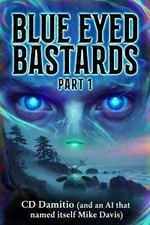
Readers and fans of Of Human Bondage will really enjoy Blue Eyed Bastards — my coming-of-age novel about the wound you don’t get over and the long attrition of becoming the person who gets over it anyway. Same target as Maugham. Different country. Different century. Same shape. Have a look and let me know what you think.

CD Damitio writes at indignified.substack.com — essays on utopias, dystopias, and the spaces between. Free to read. No algorithm, no sponsored content. His books can be found on Amazon at https://www.amazon.com/stores/CD-Damitio/author/B001JP7NWA
CD Damitio writes INDIGNIFIED — utopias and dystopias explored. Free to read.