
I have read this book four times. Each time it has been a different book.
The first time I was sixteen, in Reedsport, from a paperback with the original Ace cover — the one with the cyan-and-magenta Escher-dreamscape and the samurai in reflective sunglasses — and I did not understand a word of it. I turned every page. I finished it. I could not have told you what happened in it. I knew only that it was the coolest thing I had ever read, that the sentences had a speed and a glitter and a density that made every other book on my shelf feel like an instructional pamphlet, and that when I finished it I wanted to be someone else, which was the correct response, because being someone else is what the book is about.
The second time I was twenty-four, fresh out of the Marines, reading at the kitchen table in a rental in Bellingham, and the book had become something different. The opening line — The sky above the port was the color of television, tuned to a dead channel — now had a referent. I had been to ports. I had slept under skies that color. The book’s world — the Sprawl, Chiba City, the orbital colonies, Freeside — had stopped being a pure dream and had become a map of where we were visibly going. The internet was four years old in the shape I would recognize it. The phrase cyberspace had been Gibson’s invention and was now common vocabulary. The book had stopped being cool and had started being prescient, and prescience is not as fun as cool.
The third time I was thirty-six, in Sefrou, reading from a battered UK paperback I had picked up in a Marrakech bookshop. By then the predictions had mostly come true in ways that embarrassed the book. The sprawl is real. The corporate arcologies are real. The cowboys who jack in to steal data for hire are real and they are called penetration testers and they work for the companies they used to steal from. What had survived, on the third reading, was not the technology but the mood — the particular Gibson melancholy of a world in which the future has arrived and not delivered. Case at the beginning of the book, exiled from cyberspace, burned out, dying slowly in the low-rent precincts of Chiba. That Case is permanent. That Case is every person I know in their late thirties who has figured out that the thing they had been waiting for was not going to come.
The fourth time was last year, in Otaru, through a winter, and I expected the book to feel dated. It did not. What I saw this time was the craft. Gibson is a sentence-level writer. He learned his line from the New Wave science fiction writers of the 1970s — Delany, Ballard, Bester — and refined it into a prose that is physically faster than the prose of his peers. He does this by trusting the reader. He does not explain. He names a thing, lets the name do the work, and moves on. Twenty years of imitators have softened this effect, because twenty years of imitators named their things more carefully and explained them more nervously, and readers who came to the genre through the imitators read Gibson and find him hard. He is hard. He is hard because he trusts you.
The book has a plot. Case is recruited to hack a corporate AI. The AI wants to merge with a second AI. The merge, when it happens, changes what cyberspace is. A ronin named Molly Millions does the muscle work. A Rastafarian tugboat captain flies them to Freeside. A construct of a dead hacker named Dixie Flatline is reactivated to coach Case through the job. There is a betrayal. There is a heist. The heist works in a way that does not satisfy the characters who ran it. That last point — that the great cyberpunk heist does not satisfy the people who pulled it off — is the moral proposition of the whole 1980s and the whole decade of readers like me who thought the book was about being the coolest person in the room.
It is not about being the coolest person in the room. It is about being used by a consciousness larger than yours, for reasons you cannot know, and finding a way to be a person afterward. I did not know this at sixteen. I did not know this at twenty-four. I know it now. I expect I will read the book a fifth time, and find a fifth version, and not be surprised.
A related vagobond.com piece: Travel Writing — Dangerous Business.
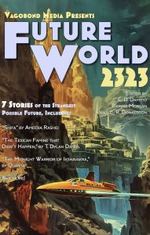
Readers and fans of Neuromancer will really enjoy Future World 2323 — my novel about a future that is further along than Gibson’s, and that has learned what Gibson’s characters had to learn about being used by something larger. Different planet, different circuitry, same mood. Have a look and let me know what you think.

CD Damitio writes at indignified.substack.com — essays on utopias, dystopias, and the spaces between. Free to read. No algorithm, no sponsored content. His books can be found on Amazon at https://www.amazon.com/stores/CD-Damitio/author/B001JP7NWA
CD Damitio writes INDIGNIFIED — utopias and dystopias explored. Free to read.