Reading this because you searched for him with a misspelling? No shame. There’s also a free book waiting at the bottom — The Odd Decade, 200 real-but-strange news stories. Keep going.
There is an 8.5% click-through rate on the search query “arthur rambeau.” There is a 1.9% CTR on “arthur rembo.” There are hundreds of people every month typing these into Google, hoping the engine will forgive them.
It does. But I want to meet them where they are.
The poet is Arthur Rimbaud. It’s pronounced ram-BOH if you’re feeling French about it, or ram-BOO if you’re feeling American about it, and either way the final consonants are silent because French spelling is a series of practical jokes the language has been playing on the rest of us for four hundred years. If you typed “arthur rambo poet” into Google, you were not wrong to expect a result. There’s also a Sylvester Stallone film and a character in a 2021 French movie called Arthur Rambo that is explicitly about the confusion. The name is a small monument to how bad people are at spelling the names of dead Frenchmen. Even his own country turned his name into a noun — un rimbaud became slang for a precocious young adventurer, the way un bovary meant a woman who read too many romances.
Here is the thing worth correcting for:
Arthur Rimbaud was born in 1854 in Charleville, a French town so boring that leaving it became his first major act of literary criticism. He wrote essentially everything he’s remembered for between the ages of fifteen and twenty. Then he quit. He went to Aden and Harar and ran guns to Ethiopian warlords. He died at thirty-seven, a leg amputated, his poems by then the property of his friend Paul Verlaine, who had shot him in the wrist a decade earlier in Brussels and kept publishing him out of what may have been love or may have been guilt.
If that sentence made you want to know more — keep reading. The misspellings are funnel traffic and I’ve decided, as policy, to treat people who come in through a funnel like guests instead of marks.
Which book to start with
Illuminations. Not because it’s his best — though it might be, depending on which argument you want to have — but because it’s the one that will do the most damage to your sense of what a sentence is allowed to do.
It’s a collection of about forty-two short prose poems, most of them under a page. Verlaine assembled it from loose manuscripts Rimbaud had handed him before the whole apparatus of their relationship collapsed. Rimbaud himself was in Africa by the time Illuminations came out in 1886 and was not particularly interested in hearing about it. He had become a coffee trader. He was, by most accounts, a terrible person to work for.
The poems don’t scan. They’re not really arguments. They’re objects — small, bright, dense, sealed, like something you might find at the bottom of a tidepool that refuses to open even under a hammer. The opening of “Après le Déluge” goes:
As soon as the idea of the Flood had subsided, a hare stopped among the clover and the swaying flowerbells, and said his prayer to the rainbow through the spider’s web.
That’s a complete poem-shape in one sentence. A hare, a theology, a rainbow, a spider, a flood. You could teach a graduate seminar on it. Or you could skip the seminar, read it twice, and walk around the rest of your day feeling like the world got suddenly more porous.
The other essential piece is A Season in Hell — Une Saison en Enfer — which Rimbaud actually paid to have printed himself in 1873, the only book he ever saw published. It’s shorter, angrier, more personal, and — if you’re the sort of reader who wants the poet to show up on the page rather than disappear into the imagery — it’s the one that will hit you. It reads like a long hallucinated letter of resignation. Which is what it was.
Why the misspellings make sense
I want to give the people who came in through “rambo” and “rembo” and “rambeau” a quick reason to feel good about it.
English-speakers butcher Rimbaud because the rules for the name are counterintuitive at every layer. You have to know that -imb- in French is pronounced like -amb-, that the final -d is silent, that the -au is a single vowel sound, and that the whole name stresses the last syllable even though English wants to stress the first. That’s four rules working against you, all at once, for one four-syllable name.
Also — there was a Sylvester Stallone film called First Blood starring a character named John Rambo. It came out in 1982. Rambo is the third-most-googled five-letter string in the English language after “email” and “Trump.” Rimbaud has been pulling Rambo’s reputation off his own name for forty-three years and counting.
Also — and this is the one I love most — there’s a French film from 2021 called Arthur Rambo, directed by Laurent Cantet. It’s about a young novelist who gets canceled when his old offensive tweets resurface under a pseudonym he used as a teenager. The pseudonym is Arthur Rambo. The film is explicitly about how Arthur Rimbaud’s myth — the young genius who says the wrong thing, then vanishes — has metastasized into the age of social media. The spelling error is the premise. They knew. They made a whole movie out of knowing.
So if you got the name slightly wrong on the way to reading about him: you are in a very long tradition. You are, in some sense, already reading Rimbaud correctly. He was always going to be one letter off.
Where I come into this
I wrote about Rimbaud years ago in a longer essay you can read here. I wrote about him because, at twenty-six, I traded my television for a VW bus and started moving. Rimbaud had vanished from Europe at twenty-one and gone to Africa. I had no illusion about being Rimbaud. But I had the same question he had, which was: what does a person have to give up to live a life that isn’t already written down?
The answer for him was everything. The answer for me has been less dramatic — a corporate job, a few countries, the idea of stability — but the question is the same one. It’s the question a lot of us carry around and never name.
If any of this has you curious about what I do when I’m not writing book reviews, I have something for you.
A free book, as a thank-you for reading to the end. The Odd Decade is a collection of 200 real news stories from 2005–2015 that I saved off the internet before the internet got sanitized. Glue-huffing macaques. Fantasy coffins shaped like airplanes. The authorized Unabomber garage sale. Kim Jong-il’s stunt doubles. Not hoaxes — actual reported news stories from the years when the web was still weird. Email only, no spam, no list-selling.
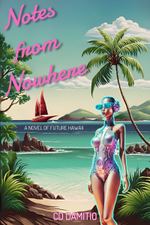
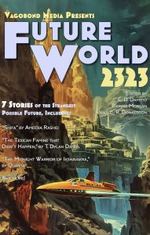
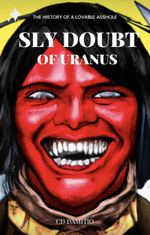
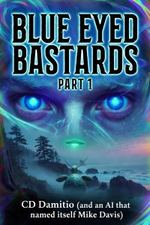
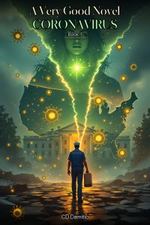
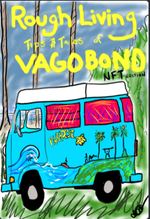
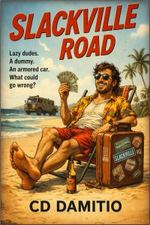
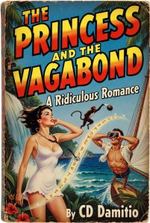
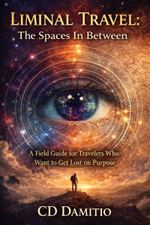
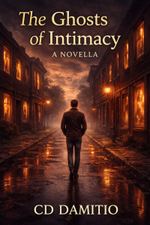
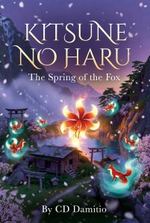
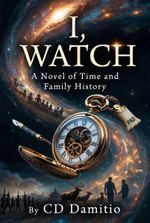
If you’d rather just look at my books directly — here’s my Amazon author page. I don’t run affiliate links. The click earns me nothing extra. I just figured you’d appreciate the shortcut.
One more thing, about the spelling
If you want a small trick for remembering it: RIMBAUD contains the word IMBA, which is gamer slang for “imbalanced.” It fits. He was nineteen years old, disassembling the French language, and then he left.
Stay weird. Read the poems. Get the name right next time. He would not have cared, but I do, a little, on his behalf.
Before you go — take The Odd Decade.
200 real, reported news stories from the weirdest years of the internet. Glue-huffing macaques. Kim Jong-il’s stunt doubles. The authorized Unabomber garage sale. All real. All lost to time unless someone saved them.
I saved them. It’s yours free.
One email. Not a drip campaign. No list resale. Unsubscribe anytime.

CD Damitio writes at indignified.substack.com — essays on utopias, dystopias, and the spaces between. Free to read. No algorithm, no sponsored content. His books can be found on Amazon at https://www.amazon.com/stores/CD-Damitio/author/B001JP7NWA
CD Damitio writes INDIGNIFIED — utopias and dystopias explored. Free to read.