The Beat Century — post 3 of 100. Rachel Carson, Silent Spring (1962).
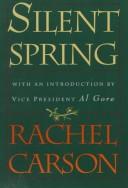
Published in September 1962 after four years of research, Carson’s account of what pesticides do to living systems survived a coordinated industry campaign against its author and effectively created the modern environmental movement.
Silent Spring is not a Beat book, and its inclusion in an account of that era is deliberate. The Beats were writing against a postwar American consensus about progress, machinery and the good life; Carson took the same consensus apart with footnotes. Where Ginsberg gave the industrial system a name out of the Old Testament, Carson gave it a chemical formula and a body count. The two projects belong to the same decade and the same argument.
Houghton Mifflin published the book on September 27, 1962. Carson, a marine biologist who had worked for the U.S. Fish and Wildlife Service and already written bestsellers about the sea, had spent roughly four years on the research. She died of cancer barely eighteen months after publication.
How the Book Began
The origin was a letter. In January 1958 Carson’s friend Olga Owens Huckins wrote describing birds dying on her property after DDT spraying. Carson had been circling the subject for years and had at one point considered co-writing on it with the journalist Edwin Diamond, but the project became hers when The New Yorker commissioned an extended article that grew into the book’s foundation.
What she assembled was not a polemic in the ordinary sense. It is a work of synthesis, drawing together scattered toxicology, wildlife biology and epidemiology that specialists knew in pieces and nobody had assembled for a general reader. The central technical argument is bioaccumulation: that persistent compounds do not stay where they are sprayed but concentrate upward through food chains. Carson argued the chemicals were badly named — they should be called biocides, since their effects were never confined to the target pest.
The Fable and the Method
The book opens with a short chapter called “A Fable for Tomorrow,” describing an American town where the birds have gone silent — an invented composite, openly labelled as such, of damage documented separately in real places. It is the most quoted passage and the most criticised, since a book otherwise built on citation begins with a fiction. It was also a superb piece of rhetorical engineering, giving readers an image to hold while Carson spent the following three hundred pages supplying evidence.
The rest of the book proceeds by accumulation rather than assertion. Carson’s stated principle, that “in nature, nothing exists alone,” is less a slogan than a description of her method: each chapter demonstrates a linkage the spraying programmes had assumed away.
The Campaign Against Her
The New Yorker began serialising the book on June 16, 1962, and the chemical industry response began before the hardcover existed. Velsicol threatened legal action against the publishers and the magazine. DuPont compiled extensive internal reports on the book’s likely impact. An industry campaign of pamphlets and placed articles followed.
Much of the attack was directed at Carson personally rather than at her evidence. She was described as hysterical, as a fanatic, as probably a communist. The biochemist Robert White-Stevens declared that “if man were to follow the teachings of Miss Carson, we would return to the Dark Ages.” Former Agriculture Secretary Ezra Taft Benson reportedly wondered why a spinster with no children was so concerned about genetics. Carson, who was already seriously ill, testified before Congress without disclosing her illness, aware that it would be used against her.
The Argument She Won
The campaign failed, and it failed publicly. The book sold more than 100,000 hardcover copies in three months and over a million within two years. A CBS Reports television special on April 3, 1963 put Carson in front of ten to fifteen million viewers, where her evident calm and command contrasted usefully with the industry spokesmen arrayed against her. In May 1963 President Kennedy’s Science Advisory Committee reported and largely validated her claims.
The downstream consequences are unusually traceable for a book. The Environmental Protection Agency was established in 1970 in a political climate Silent Spring had substantially created, and the agency completed a phase-out of DDT for agricultural use in 1972. Senator Ernest Gruening told Carson that every once in a while a book appears which has substantially altered the course of history; contemporaries including Justice William O. Douglas compared its impact to Uncle Tom’s Cabin.
The Woman Who Wrote It
Carson’s authority did not come from nowhere, and understanding her earlier career explains why the book worked. She was a trained marine biologist who spent years as a writer and editor for the U.S. Fish and Wildlife Service, and she had already published bestselling books about the ocean — The Sea Around Us among them — that established her as one of the most trusted science writers in America.
This mattered enormously to the reception. When the chemical industry attempted to portray her as an unqualified hysteric, it was contradicted by a large existing readership who knew her as the careful, unexcitable explainer of tides and continental shelves. The attack on her credentials failed partly because she had spent fifteen years accumulating exactly the kind of credibility that is hardest to destroy.
The Argument That Continues
The book has had a contested afterlife. A persistent line of criticism holds that DDT restrictions cost lives in malarial regions, and Carson is periodically blamed for deaths in countries whose programmes she never addressed — a charge complicated by the fact that she explicitly argued against eradication-by-saturation rather than against all pesticide use, and by the role of mosquito resistance, which she warned about, in undermining spraying campaigns anyway. Some of her specific cancer claims have not aged as well as her ecological ones.
What is not seriously disputed is the book’s structural achievement. Before 1962 there was conservation, meaning the protection of scenic places. After it there was environmentalism, meaning the argument that industrial chemistry acts on connected living systems including the human body, and that this is a matter for public decision rather than private discretion. Carson wrote a technical brief that changed what a general reader believed was their business.
If man were to follow the teachings of Miss Carson, we would return to the Dark Ages.
Robert White-Stevens, biochemist and industry spokesman, on Silent Spring
Where to go next
For the same decade’s quarrel with industrial civilisation in an entirely different register, read Allen Ginsberg’s Howl, where the machine gets called Moloch instead of DDT.
Previous: Jack Kerouac, On the Road. Next: Robert Duncan, The Opening of the Field. One hundred books from the Beat Generation and the writers around them — the ones who got famous, the ones who got written out, and the ecological writing that grew out of the same soil. A new one every other day.
Sources
- Silent Spring — Wikipedia
- How Rachel Carson’s ‘Silent Spring’ Awakened the World to Environmental Peril — HISTORY
- Silent Spring — RachelCarson.org
- Sept. 27, 1962: Silent Spring Published — Zinn Education Project

CD Damitio writes at indignified.substack.com — essays on utopias, dystopias, and the spaces between. Free to read. No algorithm, no sponsored content. His books can be found on Amazon at https://www.amazon.com/stores/CD-Damitio/author/B001JP7NWA
CD Damitio writes INDIGNIFIED — utopias and dystopias explored. Free to read.